Panasonic Interactive
| 3 minutes read
Panasonic Interactive Digital Ad Case Study
This project was created as a digital advertising experience for Panasonic, designed to humanize high-end consumer electronics by anchoring them in personal identity rather than technical specifications. Instead of leading with resolution, frame rates, or feature lists, the campaign started with a more emotional question: what does your style say about you? ShopAI was tasked with designing an interactive ad that reframed a television not as a piece of hardware, but as an extension of taste, confidence, and lifestyle. The result was a personality-driven digital experience that matched users with a Panasonic TV based on who they are, not just what they buy.
The Emotional Starting Point
Technology ads often assume that people make decisions rationally. In reality, many purchasing decisions are emotional first, logical second. This campaign leaned into that truth. Rather than telling users why a TV was better, it invited them to discover which TV fit them. The experience positioned personal style as the entry point, creating a sense of recognition and aspiration before any product details appeared. The emotional hook wasn’t performance. It was identity.
Entering the Experience
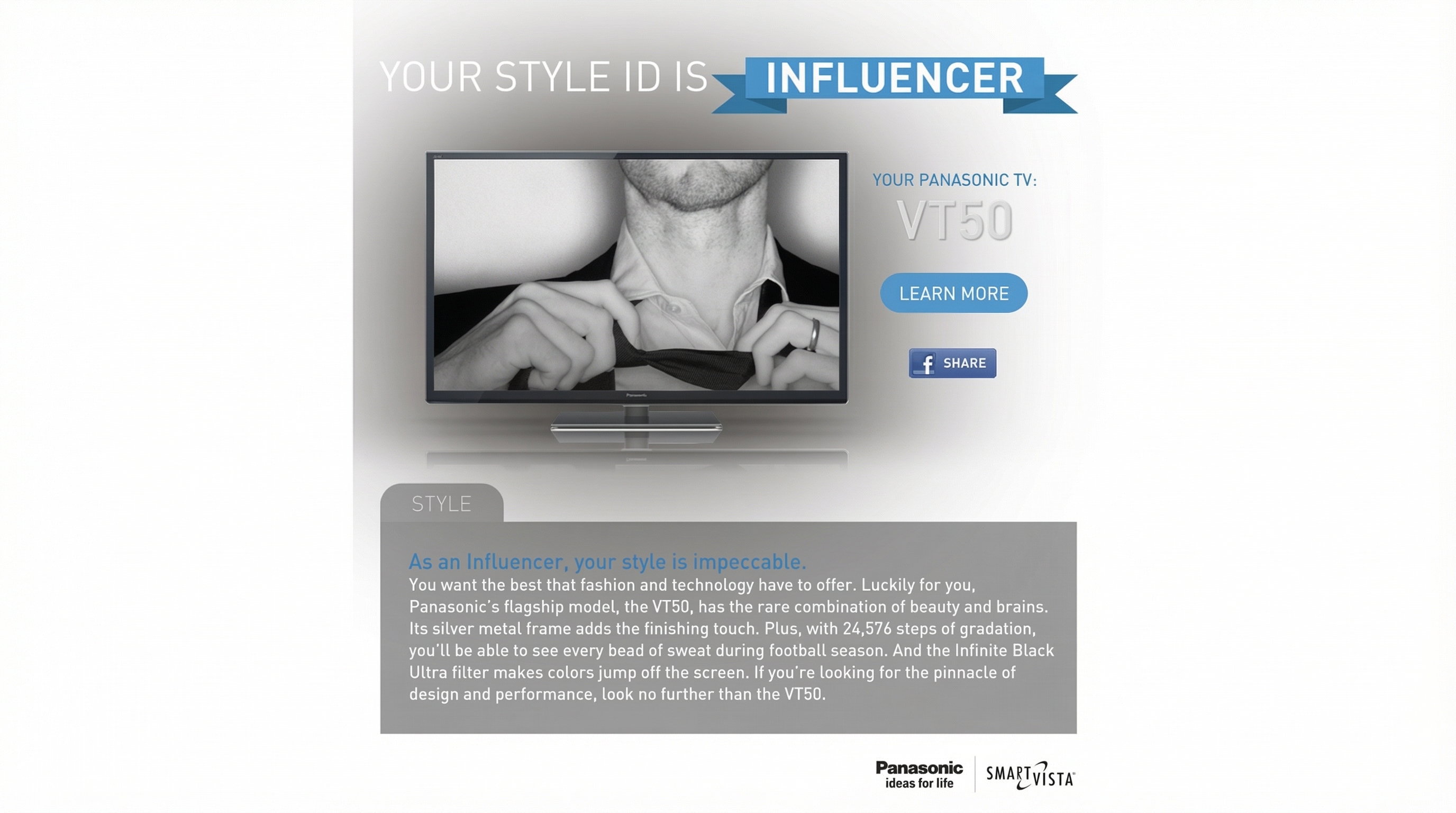
Users were welcomed into the experience with a clear, confident statement: Your Style ID Is… Instead of browsing models, users were guided through a short, intuitive interaction that framed technology through lifestyle cues. When the result appeared, it didn’t feel like a recommendation algorithm. It felt like a reflection. Being labeled an “Influencer” wasn’t about social status. It was about confidence, taste, and presence. The product reveal that followed felt earned, not imposed.
Product as Self-Expression
Once the style identity was revealed, the Panasonic VT50 was introduced as a natural extension of that persona. The language shifted from specs to sensation. Design was described through craftsmanship. Performance was framed as immersion. The product wasn’t positioned as powerful for power’s sake, but as refined, intentional, and visually striking. The TV became less of a device and more of a statement piece—something that belonged in the user’s space because it aligned with who they were.
Visual and Interaction Design
The visual design reinforced calm confidence. Neutral tones, controlled contrast, and editorial-style composition created a premium feel without intimidation. Imagery focused on subtle gestures and personal details rather than overt product glamour. The interface stayed minimal, allowing the message to breathe and the user to feel centered in the experience. Calls to action were present but never aggressive. Sharing felt optional, not forced. Learning more felt like curiosity, not obligation.
The Lasting Impression
Users didn’t exit the experience remembering a list of technical features. They left with a sense of alignment. The ad didn’t say, “This is the best TV.” It said, “This is your TV.” That distinction changed the emotional relationship between user and product. Panasonic wasn’t competing on noise or numbers. It was competing on relevance.
Why This Matters
In a crowded consumer electronics market, differentiation doesn’t come from specs alone. It comes from meaning. This project demonstrates how interactive advertising can transform technology into something personal, relatable, and aspirational. By starting with identity instead of hardware, the campaign created a deeper connection and stronger recall. At ShopAI, we design digital ads that don’t shout features. They invite people to see themselves in the product.