Oral-B Gamified
| 4 minutes read
Oral-B Gamified Campaign Case Study: When Oral Care Becomes a Race You Want to Win
This project was designed as a campaign-led, gamified advertising experience for Oral-B with a very specific ambition: to make people feel something while interacting with a brand they already knew. Oral care is intimate, repetitive, and deeply habitual, yet most advertising around it feels distant and instructional. This campaign set out to change that emotional dynamic. Instead of asking users to listen, read, or compare, the experience asked them to play. ShopAI created an interactive racing game where Oral-B products became vehicles, competition replaced explanation, and curiosity replaced obligation. The result was not just an ad, but a moment of engagement that felt surprising, playful, and personal.
The Emotional Starting Point
Most people don’t think about toothbrushes with excitement. They think about routine. That emotional neutrality is exactly where attention is lost. The campaign began with a simple emotional shift: what if oral care felt active instead of passive? What if choosing a toothbrush felt closer to choosing a character in a game? By framing the experience as a race, the campaign introduced tension, anticipation, and desire to improve. Winning mattered. Performance mattered. And suddenly, product choice mattered too.
Entering the Experience
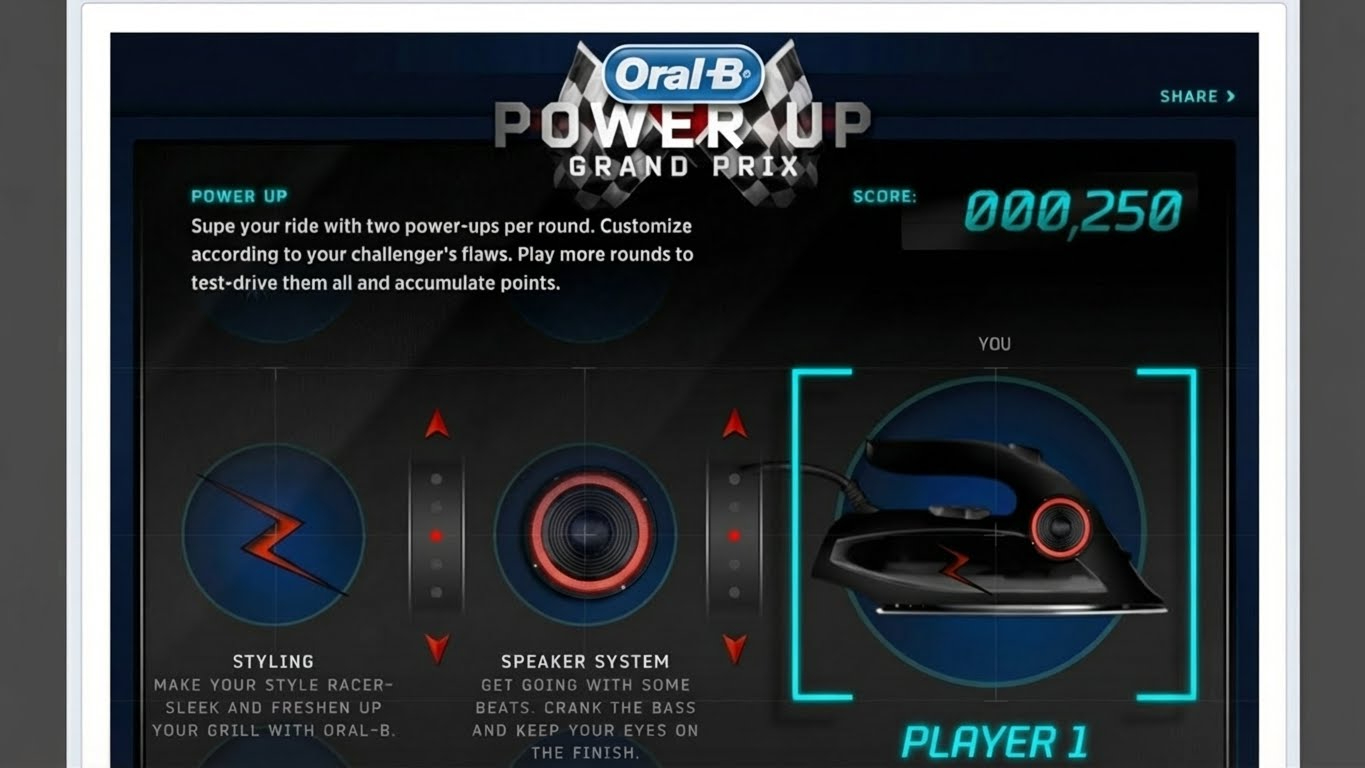
From the moment users entered the experience, they were invited to make a decision. There was no wall of copy or feature breakdown. Instead, they were asked to select an Oral-B product and step into the race. That choice created ownership. The product was no longer something being marketed at them. It was something they controlled. As the race began, users immediately felt differences in how their chosen product behaved. Some felt fast and aggressive. Others felt stable and precise. These sensations weren’t arbitrary. They were carefully mapped to real product attributes, translated into movement, responsiveness, and control. Learning happened quietly, through feeling rather than explanation.
Customization as Emotional Investment
Customization became the emotional core of the experience. As users upgraded and tuned their product, they weren’t just improving stats. They were shaping an outcome. Each adjustment created a feedback loop. Change something. Feel the difference. Try again. This process mirrored how people relate to products in real life. You test. You adapt. You develop preferences. Over time, attachment forms. The experience encouraged experimentation and replay, not because it demanded it, but because users wanted to do better next time. Progress didn’t feel like a marketing funnel. It felt like mastery.
The Role of Competition
Racing introduced urgency. Every corner, every straightaway, every loss or win carried emotional weight. Competition added stakes without pressure. Losing didn’t punish. It invited retry. Winning didn’t conclude the experience. It opened the door to experimentation with another product. This emotional rhythm kept users engaged longer than traditional ads, not because of rewards or prizes, but because the experience respected their agency.
Visual and Interaction Design
Visually, the campaign leaned into motion and clarity. Racing visuals delivered speed and excitement, while the interface remained calm and readable. Products were always the focal point, never abstracted beyond recognition. Motion feedback reinforced control. Acceleration felt earned. Turning felt responsive. Visual restraint ensured the experience stayed accessible, even in short sessions. The design was intentionally lightweight, allowing the experience to load quickly and feel approachable, whether encountered through a social ad, a campaign page, or a mobile browser.
The Lasting Impression
When users exited the experience, they didn’t leave with a list of features in their heads. They left with a memory. A feeling. A sense that one product felt faster, another felt more controlled, another felt balanced. That emotional imprint is what stayed. The campaign transformed Oral-B from something people use out of necessity into something they remembered interacting with by choice.
Why This Matters
Emotional engagement is the missing layer in many product campaigns, especially in healthcare and everyday consumer goods. This project shows how gamification, when grounded in real product truth, can create moments of joy, curiosity, and agency. It demonstrates how brands can earn attention without demanding it. At ShopAI, we design interactive campaigns that don’t explain products. They let people experience them.