BenOps Workflow
| 4 minutes read
Abett BenOps Workflow Platform
This case study highlights how ShopAI designed and prototyped an AI-enabled workflow intelligence dashboard for Abett (BenOps). The project demonstrates how ShopAI demos, prototypes, and MVPs help organizations visualize complex systems, validate AI-driven workflows, and align stakeholders before full product development. Built as a realistic, end-to-end demo, the platform shows how AI optimization can be introduced without disrupting core operations—an approach especially valuable for early-stage startups, enterprise innovation teams, and founders preparing for pilots or fundraising.
The Business Problem
Many organizations struggle to explain how their operational workflows actually work. In healthcare, benefits, and enterprise services, workflows span multiple systems, data sources, and decision rules. AI is often layered on top, making these systems even harder to understand and trust. Abett needed a demo solution that could:
- Clearly show how workflows operate end to end
- Make AI-enabled decisions understandable and inspectable
- Support sales, onboarding, and internal alignment
- Communicate value without requiring deep technical knowledge
Discovery and Strategy Alignment
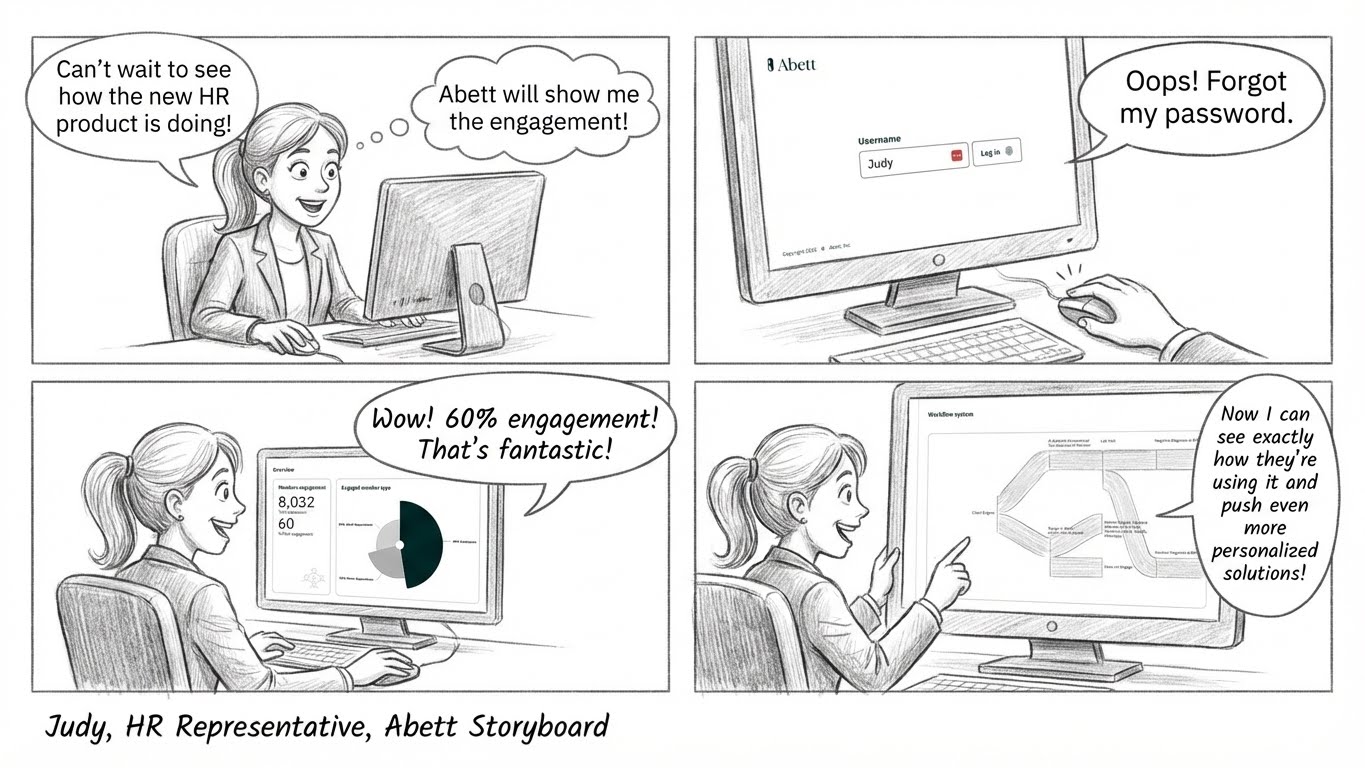
ShopAI began with discovery sessions focused on understanding how different stakeholders reason about workflows. Rather than starting with features or models, we mapped how product leaders, operations teams, and executives explain their systems to others. A key insight emerged early. Stakeholders were not asking for more automation. They were asking for clarity. They wanted to see how signals, decisions, and outcomes flowed through the system in a way they could confidently explain. This insight shaped the entire demo and prototype strategy.
UX Research and Enterprise Mental Models
UX research showed that operational teams think in stages, exceptions, and outcomes rather than algorithms or data pipelines. We identified three dominant mental models that guided the design:
- Overview first, details on demand
- Visual workflows over configuration screens
- Outcomes and impact over raw activity
These insights directly informed the information architecture and visual language of the platform, ensuring the demo aligned with real user thinking.
Dashboard Information Architecture
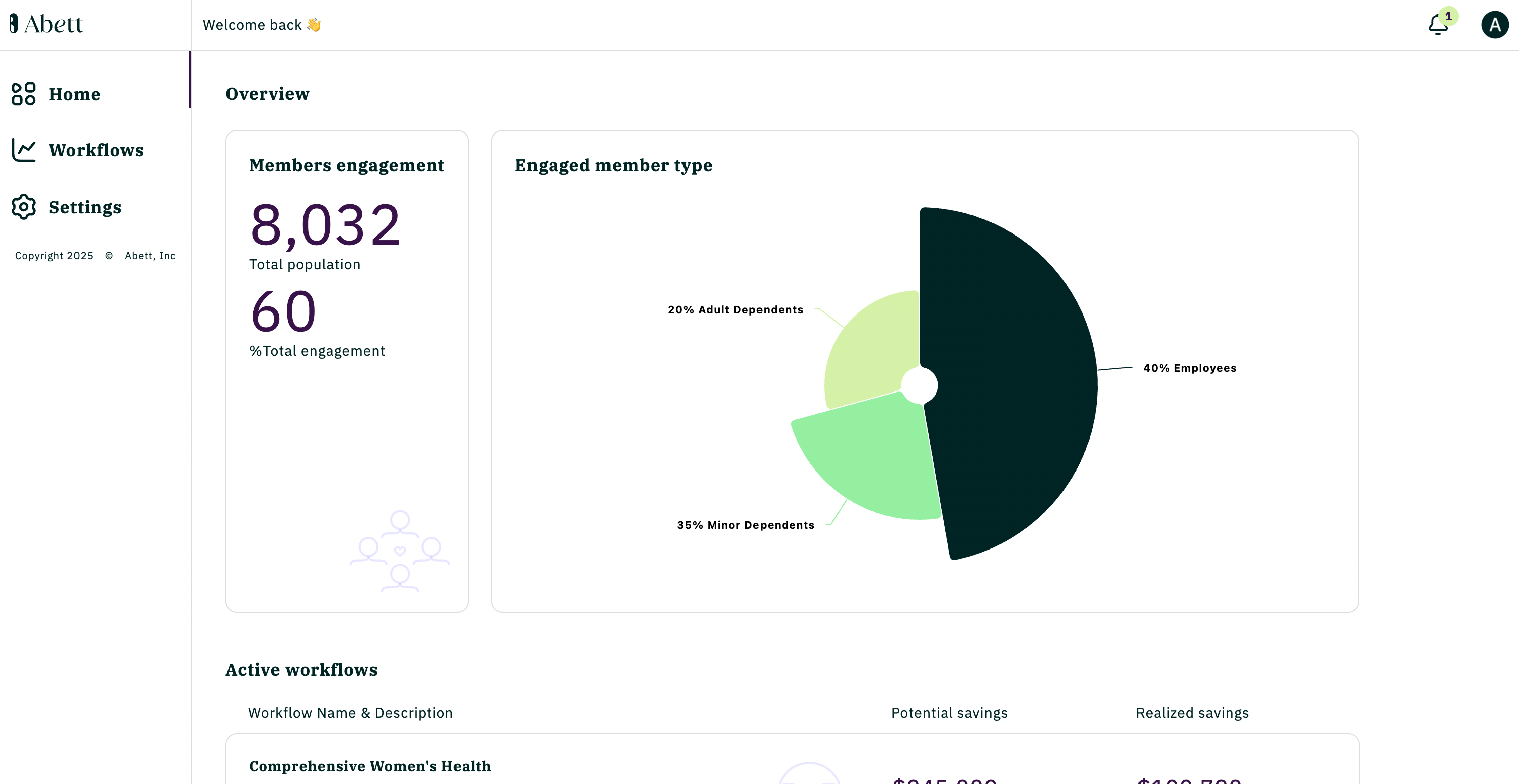
The dashboard uses progressive disclosure to reduce cognitive overload. At the top level, users see high-level engagement metrics, total population, and participation rates. This provides immediate orientation without requiring interpretation. From there, users can explore engaged member types, active workflows, and savings data only when needed. The left navigation remains intentionally minimal, reinforcing focus on workflows rather than tool complexity. This structure supports both enterprise decision-making and startup demo storytelling.
Workflow Visualization and AI Transparency
A core feature of the platform is the visual workflow system. Instead of presenting workflows as lists or technical diagrams, we designed them as clear, visual paths that show how people move through the system. These flows illustrate:
- Entry points from client systems
- AI-enabled personalized outreach
- Decision branches based on engagement or diagnosis
- Feedback loops tied to EHR and adherence signals
AI is embedded within the workflow rather than presented as a black box. Labels are descriptive and operational, reinforcing trust and explainability—critical for AI demos, MVP validation, and enterprise adoption.
Visual and Interaction Design
The visual design prioritizes calmness, clarity, and trust. Soft color differentiation helps users follow workflow paths without distraction. Typography and spacing are optimized for scanning, making the platform usable in live demos and stakeholder presentations. Interactions are subtle and predictable, reinforcing the platform’s role as an operational tool rather than a marketing interface.
Validation and Iteration
Designs were validated through stakeholder walkthroughs focused on comprehension rather than aesthetics. We tested whether users could describe workflows back in their own words and identify where AI added value. Iteration focused on clarifying labels, smoothing flow transitions, and strengthening hierarchy to ensure the demo worked for both first-time viewers and experienced operators. This approach mirrors how ShopAI prototypes and MVPs are refined before engineering investment.
$$ Results and Business Impact
The final Abett demo gives teams a shared, visual language for understanding complex workflows. Stakeholders can quickly assess performance, trace AI-driven decisions, and identify optimization opportunities. From a business perspective, the demo:
- Builds trust in AI-enabled operations
- Improves internal and external alignment
- Accelerates sales conversations and pilots
- Reduces risk before full-scale development
Why This Matters for Startups and Product Teams
Many early-stage startups and innovation teams rush into building AI features before validating workflows and user understanding. This case study demonstrates why strong demos, prototypes, and MVPs are critical before scaling. If your team is:
- Building an AI product for enterprise or healthcare
- Preparing for fundraising or pilot programs
- Struggling to explain complex workflows
- Seeking AI optimization without disrupting operations
ShopAI can help.
Build Your Demo, Prototype, or MVP with ShopAI
ShopAI partners with early-stage startups, enterprise teams, and founders to design AI demos, prototypes, and MVPs that clarify value, align stakeholders, and reduce risk.